
History behind the company
In 2023, La-kwa sa muqw Forestry’s journey began with the signing of a landmark agreement increasing First Nations’ participation in a stronger Vancouver Island economy and supporting their vision for the future.
Our Story
Learn more about the history behind La-kwa sa muqw Forestry.
Stewardship
First Nations are stewards of their territories
The Tlowitsis, We Wai Kai, Wei Wai Kum, and K’ómoks First Nations, all member First Nations of the Nanwakolas Council, hold Indigenous rights and title in their respective territories. They have been stewards of their forests for millennia.
However, the capacity of the First Nations to engage in and prosper from the forestry economy in their territories was severely limited by the impacts of colonization, beginning with the taking of forestry lands for the E&N railway on Vancouver Island in the 1800s. Legislated constraints on First Nations owning and working in certain industries were als in place until the mid-20th century.
First Nations’ approach to business
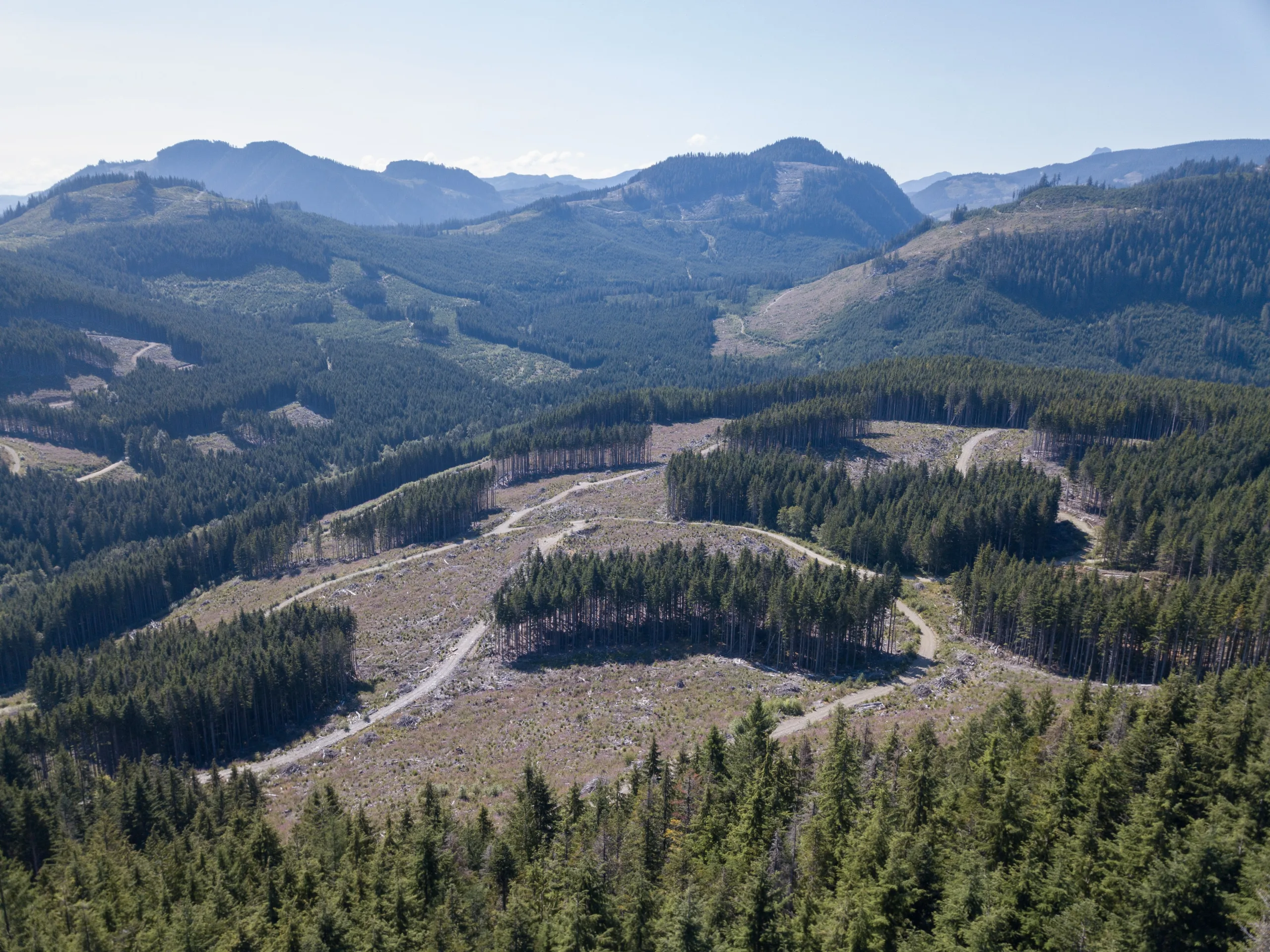
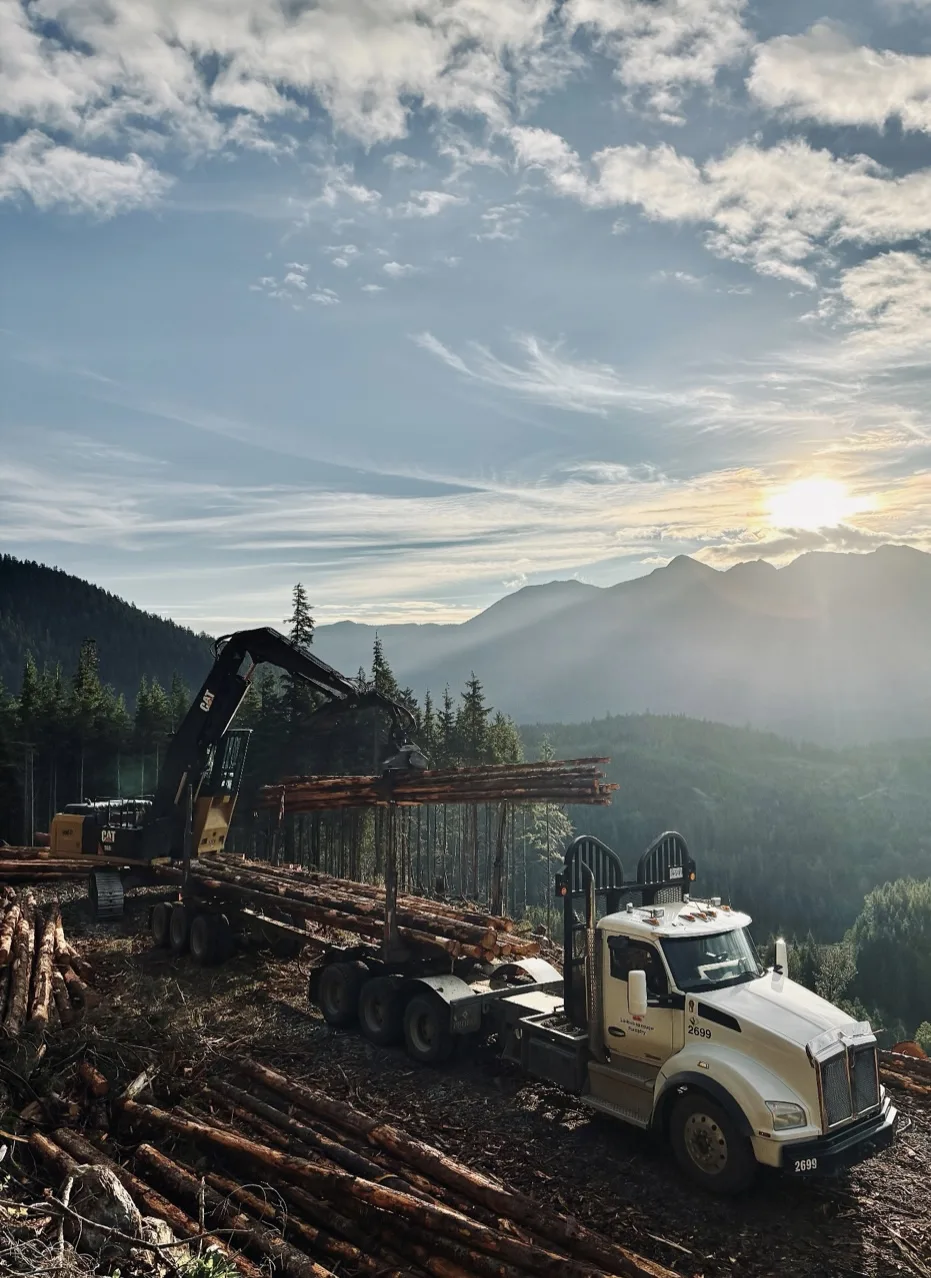
This history underpins the First Nations’ desire to own their own tenures and forestry businesses. The First Nations considered La-kwa sa muqw Forestry a good investment for a number of reasons. It is a model for stability for all concerned, with fewer disruptions and operational delays than in previous decades as more First Nations contractors and employees are engaged in the forestry sector. Powerful, prosperous First Nations fully engaged in the forest economy in their territories is good for everyone in the sector, providing investment, stability, and certainty. Not least of all, reconciliation is good for everyone.
A landmark agreement
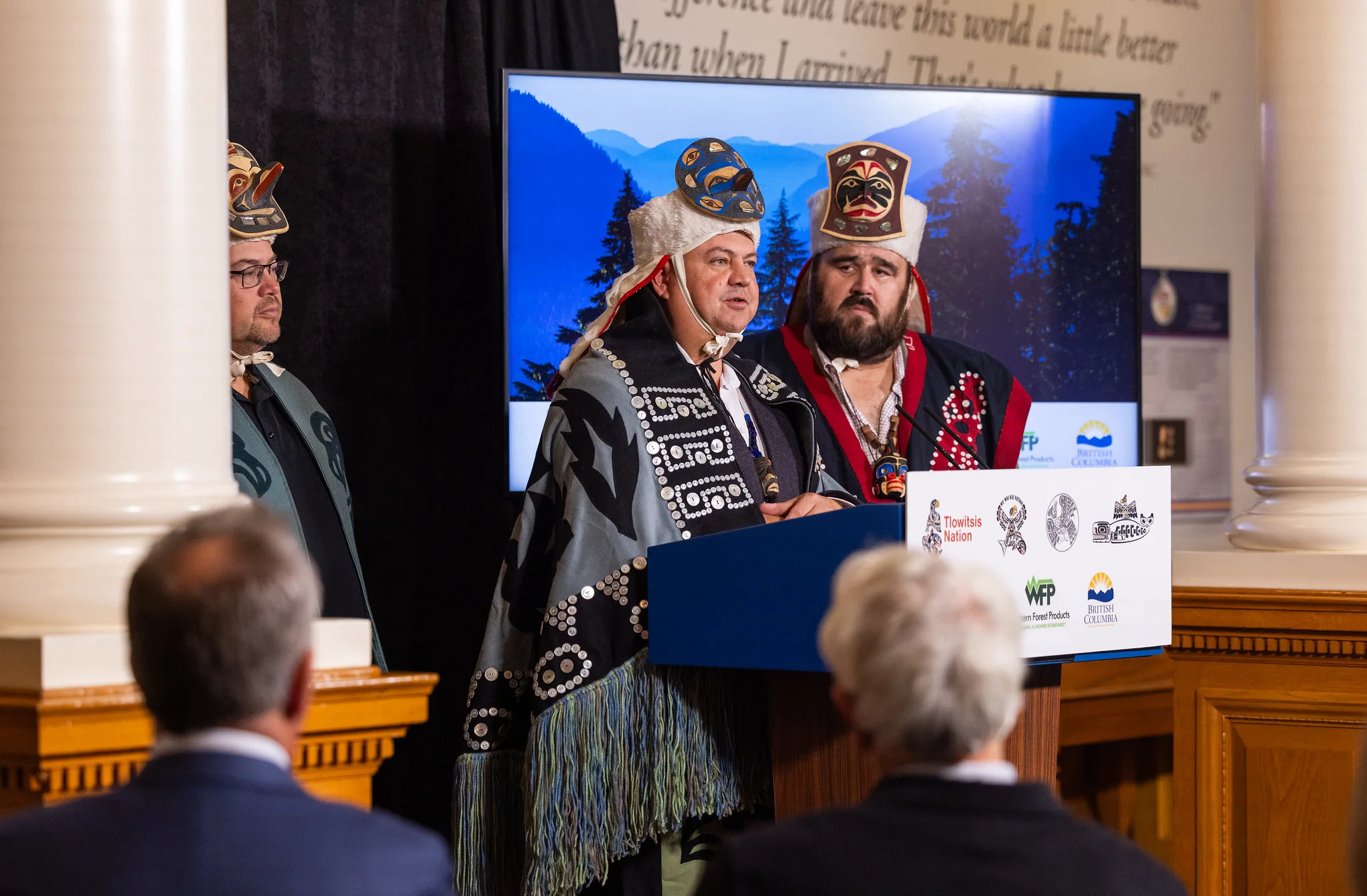
Tlowitsis, We Wai Kai, Wei Wai Kum, and K’ómoks First Nations reached an agreement with Western Forest Products Inc. in October 2023 for the Nations to acquire a 34% interest in a portion of Western’s Mid Island Forest Operation, including Block 2 of Tree Farm Licence 39 covering approximately 157,000 hectares of forest land in the traditional territories of the Nations near the communities of Campbell River and Sayward on eastern Vancouver Island. Nanwakolas Council assisted the four Nations in concluding the Agreement, which was finalized in April 2024. The Province of British Columbia helped to facilitate the arrangements through Incremental Treaty Agreements with the Nations.
The agreement resulted in the creation of Tree Farm Licence 64. It included management of an allowable annual cut of 904,540 cubic metres of timber and a long-term fibre agreement to support Western’s British Columbia coastal manufacturing operations.
Our Partners
Tlowitsis Nation
tlowitsisnation.comThe traditional territory of the Tlowitsis Nation spans the coastal area of Northern Vancouver Island, Johnstone Strait, and adjacent mainland inlets. From time immemorial until the 1960s, the Tlowitsis occupied numerous sites throughout these lands. Kalagwees, located on Turnour Island, was their primary winter residence.
The Tlowitsis were displaced from Kalagwees in the late 1960s, leading their people to be culturally and physically separated from their territory. Currently around 470 members are scattered across British Columbia.
In 2018, the Tlowitsis purchased a 635-acre property just south of Campbell River using forestry revenue. The new community Nenagwas (“a place to come home to” in English), is bustling with construction and 30 new homes will be built for Tlowitsis citizens by the end of 2026. There is a goal of 180 houses by the end of the project.
Forestry is one of two main revenue streams making Nenagwas a reality; the other is salmon aquaculture. Nenagwas is an occasion for the Tlowitsis to reconnect and revive elements of their culture – first and foremost, their language. It is also an historic opportunity for the Tlowitsis to know who they are again, heal spiritually and culturally, and have a chance to create a new future for its citizens.
We Wai Kai Nation
wewaikai.comThe We Wai Kai embrace their language and culture to build a proud, healthy, safe, and self-sufficient community. We Wai Kai people support and encourage one another to thrive by following in the footsteps of their ancestors as stewards of their lands and waters, while balancing their role in modern-day society.
Today, the We Wai Kai Nation has approximately 1,200 Citizens, with roughly half living on reserve between Cape Mudge Village and Quinsam Reserve, and the other half living off reserve. The Nation has five designated reserve lands covering 685 hectares (1,693 acres). We Wai Kai territory includes the east side of Vancouver Island, from the Qualicum River in the south to the Tsitika River in the north. On the mainland, the territory extends from Toba Inlet to Jackson Bay, including all the islands in between.
We Wai Kai’s investments in forestry include the formation of its logging company and the acquisition of 7,600 acres of forest land through an agreement with the Province of British Columbia. The Nation continues to pursue economic self-sufficiency through a principled and practical approach to resource development, balancing economic growth with environmental stewardship and conservation.
Wei Wai Kum First Nation
weiwaikum.caThe centre of Wei Wai Kum territory is Campbell River, on the east coast of central Vancouver Island in British Columbia. Based on the history of our ancestors, Wei Wai Kum territory today extends from the headwaters of Loughborough Inlet north of Campbell River to the Tsable River in the south. It goes westward to the chain of mountains on central Vancouver Island, and eastward midway through the Strait of Georgia.
The Wei Wai Kum First Nation (Campbell River Indian Band) engages in a range of social and economic programs, services and activities that promote the well-being and prosperity of our members. These include education, housing, health care, social development, and recreation. We also support activities that preserve and promote the Wei Wai Kum culture, such as training in the Lik’wala language and traditional dancing and singing.
Wei Wai Kum has learned a great deal over recent decades about forestry legislation, and about government and industrial forestry management practices in our territory. It became very clear to us that without our direct involvement in planning and decision-making, and significant benefits flowing to our Nation from forestry activities in our territory, we could no longer support the status quo. Coming to an agreement with Western, with the support of the provincial government to reach a deal that addresses our issues and concerns is encouraging. It shows the world what is attainable throughout our territory through working with different partners for a common goal: the wellbeing of our territory and our people, and the restoration of our rightful authority over our lands and waters.
K’ómoks First Nation
komoks.caFor thousands of years Indigenous people occupied the shoreline of eastern Vancouver Island stretching from what is known today as Kelsey Bay in the north, down to Hornby and Denman Island in the south, and included the watershed and estuary of the Puntledge River. The people called K’ómoks today referred to themselves as Sahtloot, Sasitla, Ieeksun and Puntledge. They lived in Salmon River, Quinsam and Campbell Rivers, Quadra Island, Kye Bay, Comox Harbour and estuary, Baynes Sound, and many other locations throughout the territory.
Today, K’ómoks has completed Stage 5 of the BC Treaty Process, working towards implementing the K’ómoks Treaty – “A Living Agreement.” In the course of its negotiations, K’ómoks set “Winning Conditions” for its treaty, including securing a path forward for the economic success of the Nation. The steadfast commitment of K’ómoks to meet the “Winning Conditions” has resulted in securing financial contributions from both BC and Canada towards meeting the Nation’s vision for forestry and a long-term wood supply.
Through its direct negotiations with the forestry sector in the last three years, K’ómoks gained knowledge and understanding of its forestry capacity requirements. This experience and the Nation’s commitment to the Partnership negotiations has been a significant benefit in concluding the Agreement with Western and the First Nations partners and strengthening relationships in the forestry sector. The opportunity that the Partnership represents includes economic, social, stewardship and management of resources in the territory.
Western Forest Products Inc.
westernforest.comWestern is an integrated forest products company building a margin-focused log and lumber business to compete successfully in global softwood markets. With operations and employees located primarily on the coast of British Columbia and Washington State, Western is a premier supplier of high-value, specialty forest products to worldwide markets. Western has a lumber capacity in excess of 1.0 billion board feet from seven sawmills, as well as operates four remanufacturing facilities and two glulam manufacturing facilities. The Company sources timber from its private lands, long-term licenses, First Nations arrangements, and market purchases. Western supplements its production through a wholesale program providing customers with a comprehensive range of specialty products.